Animal print coordinates women's footwear collections

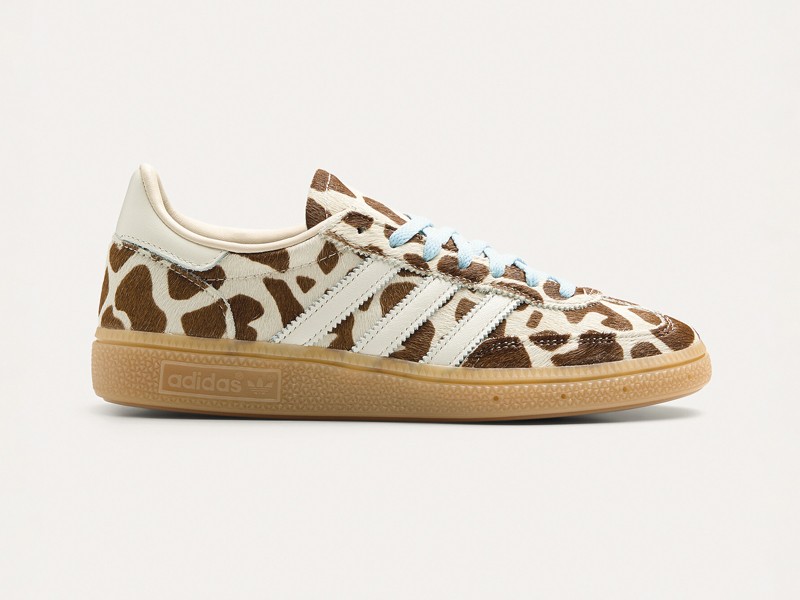
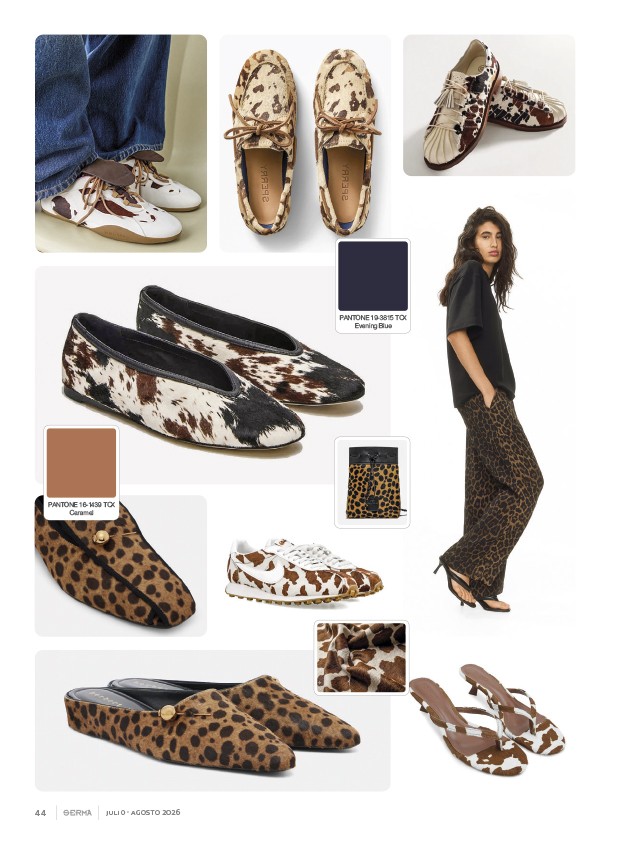
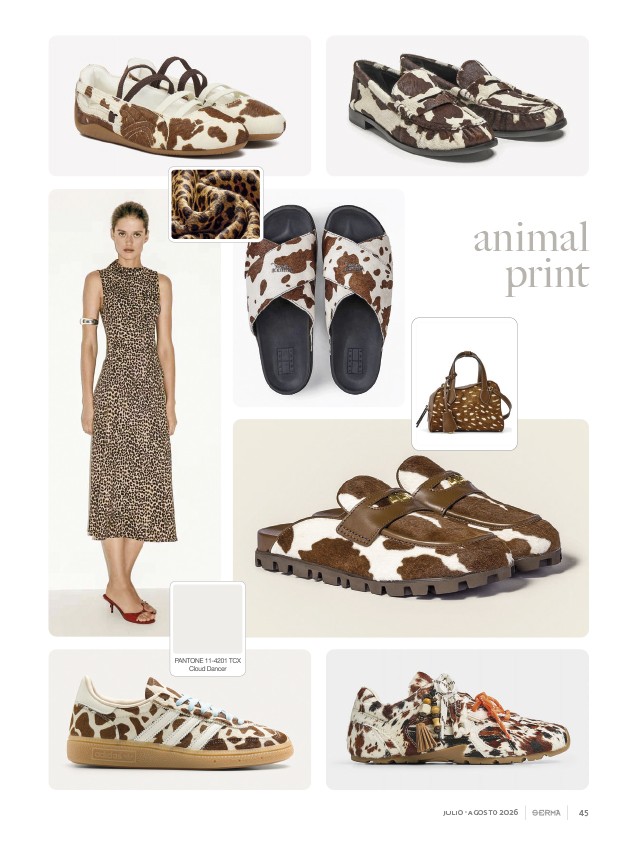
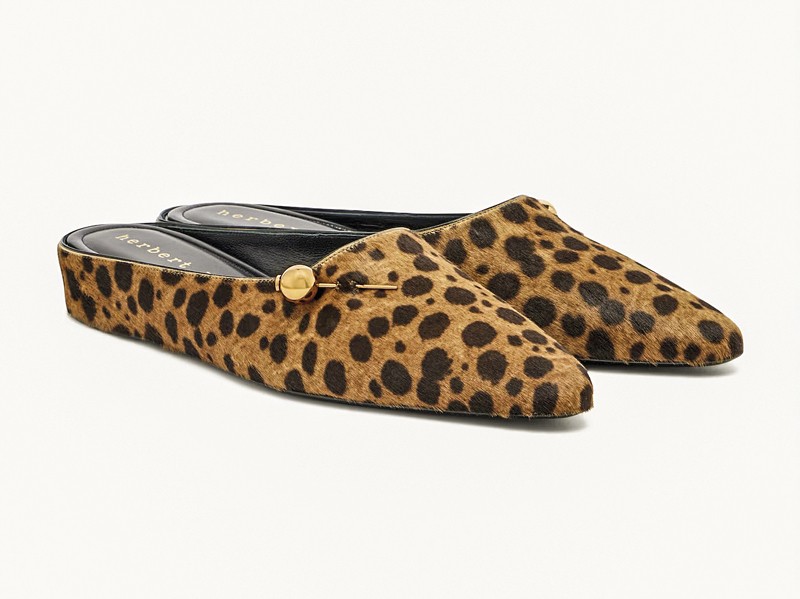
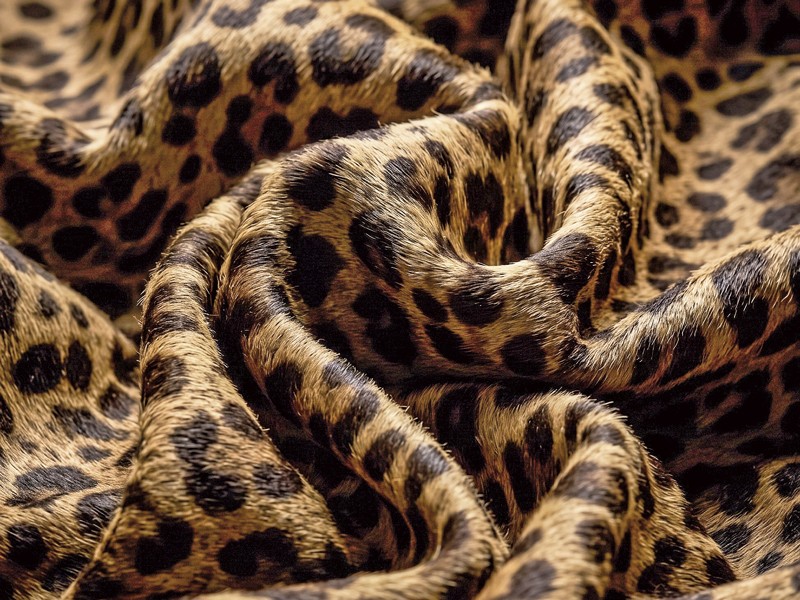
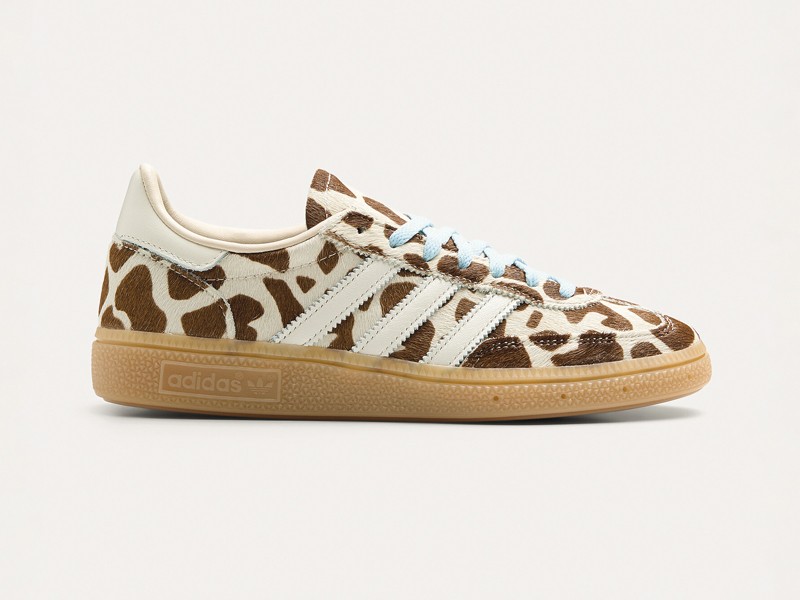
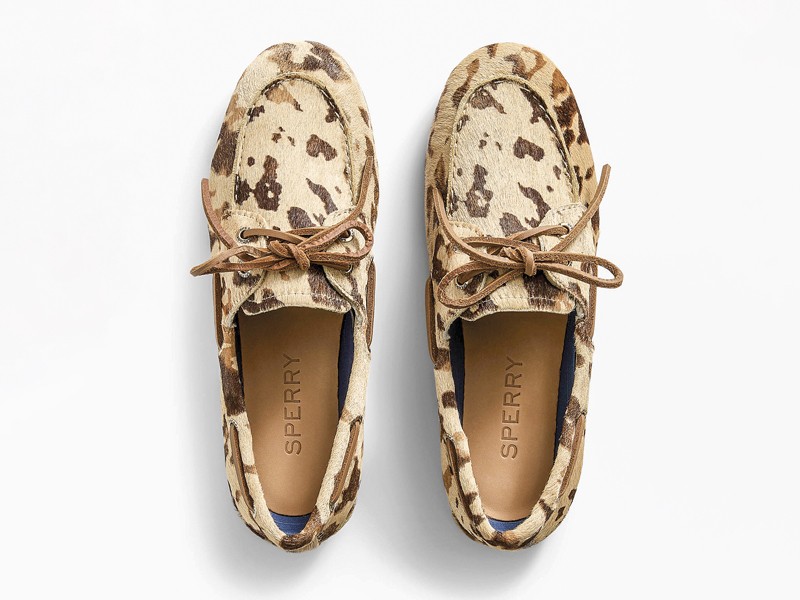
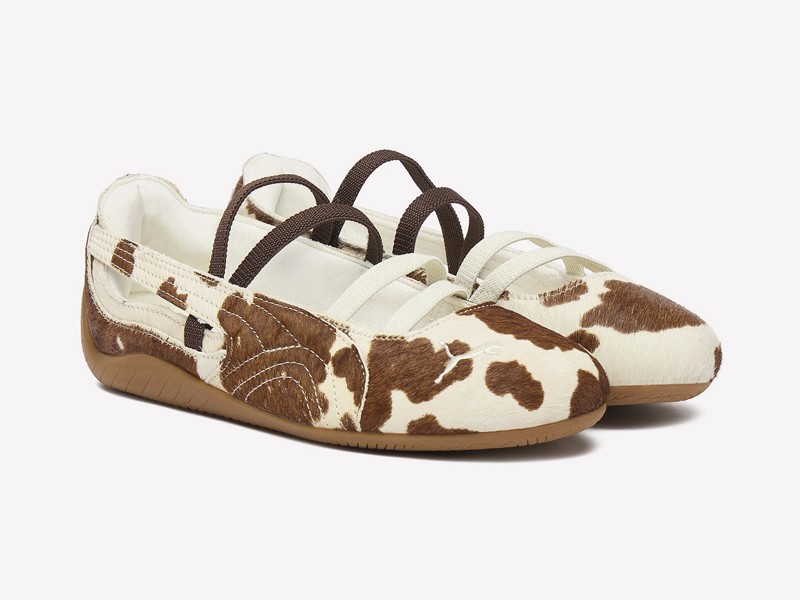
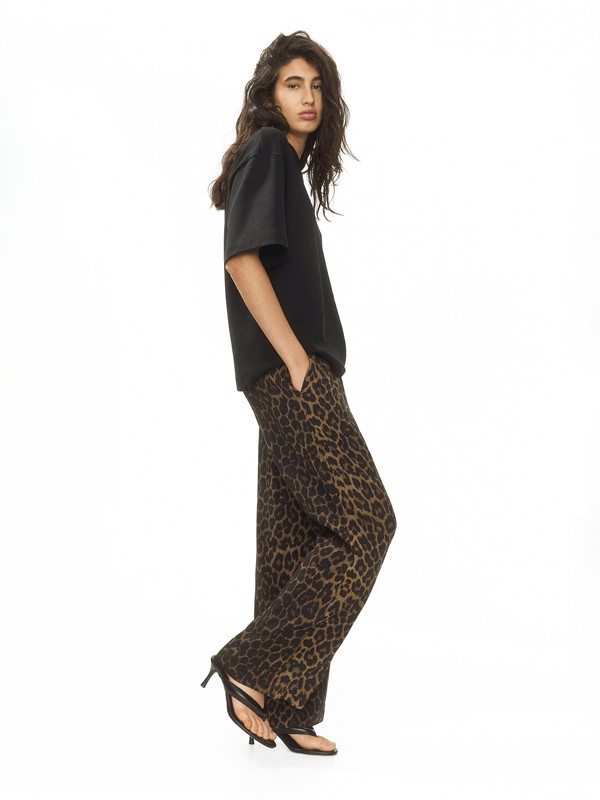
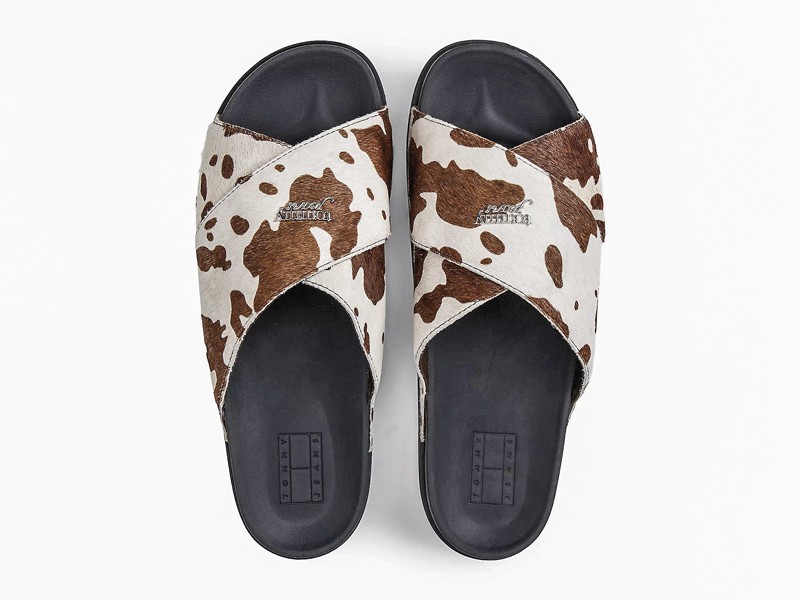
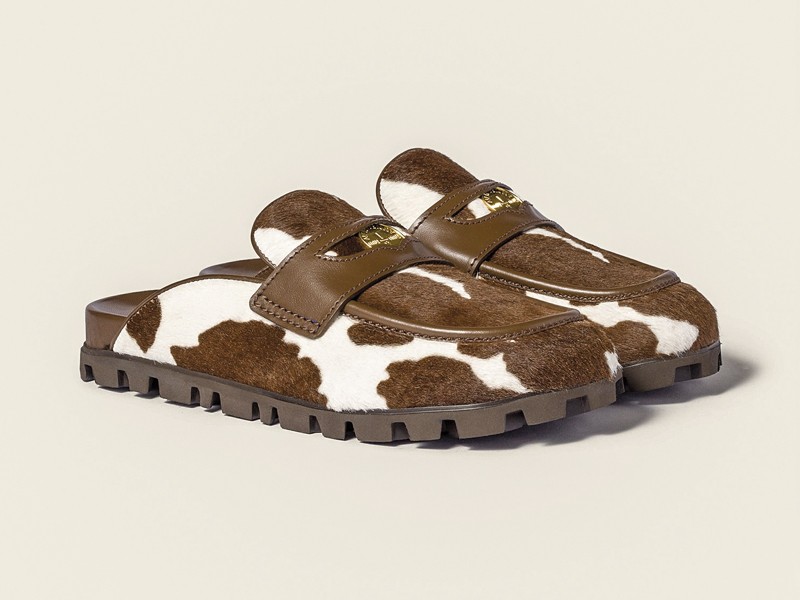
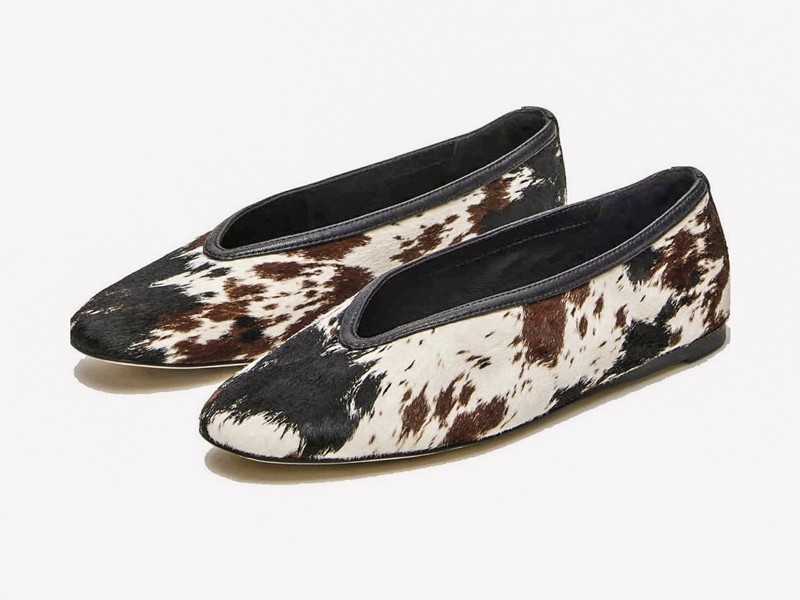
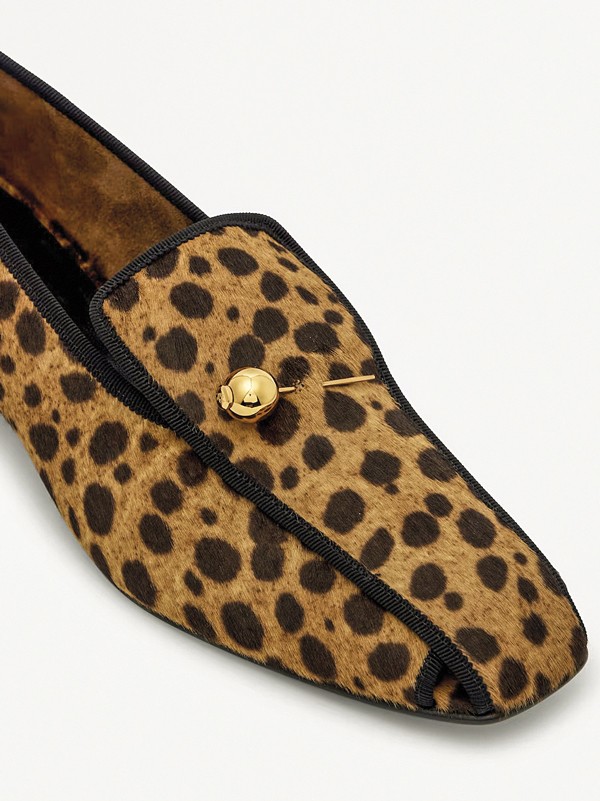
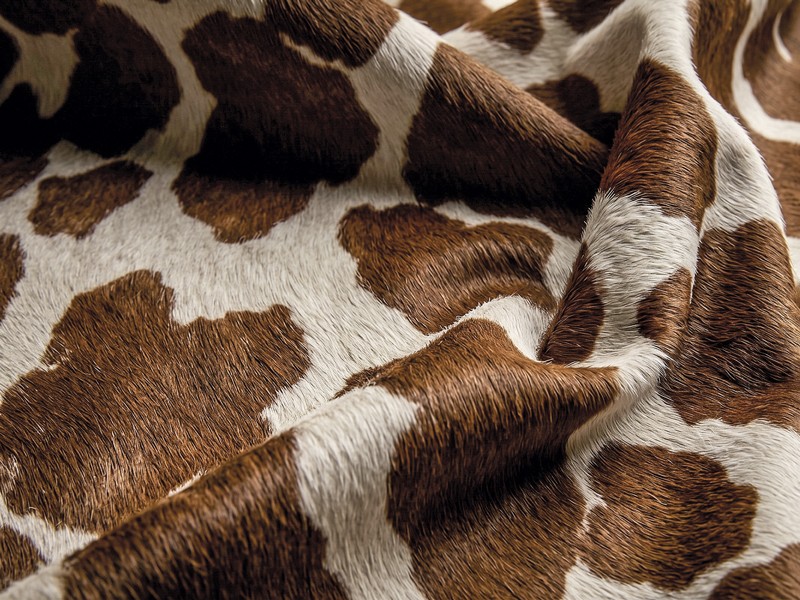
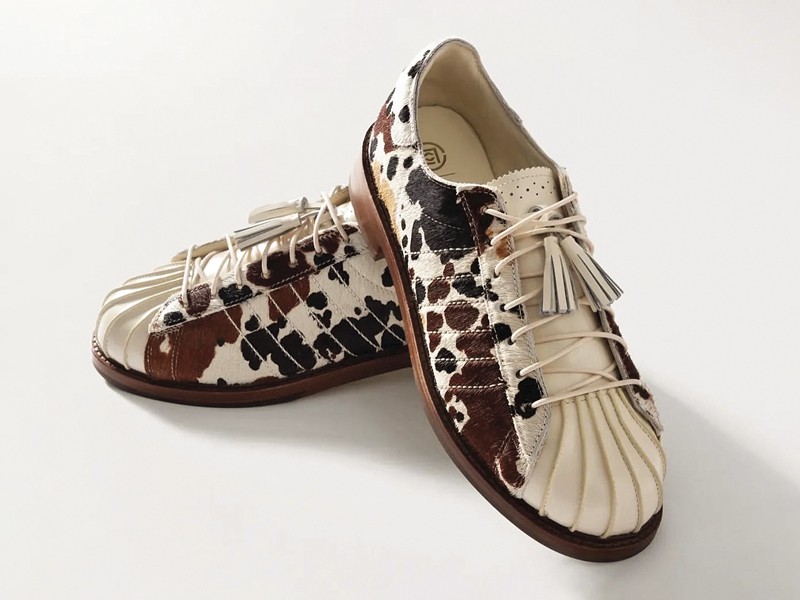
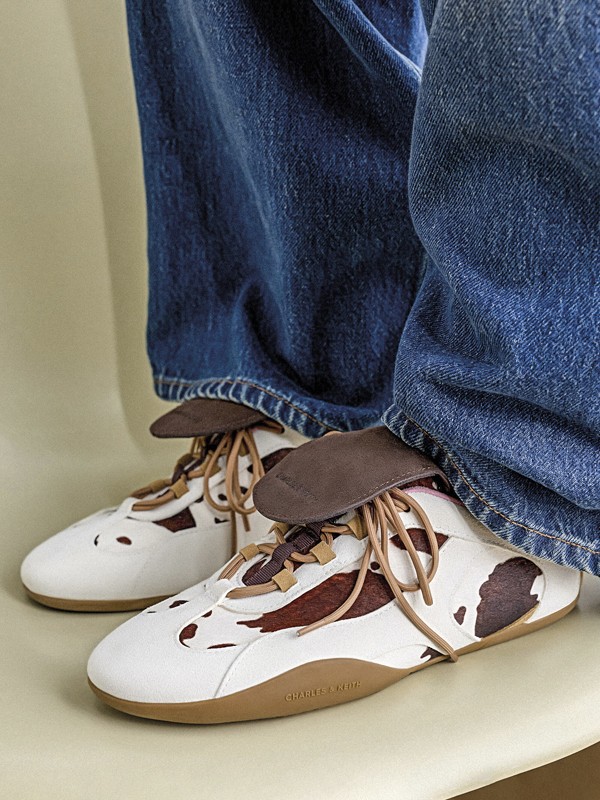
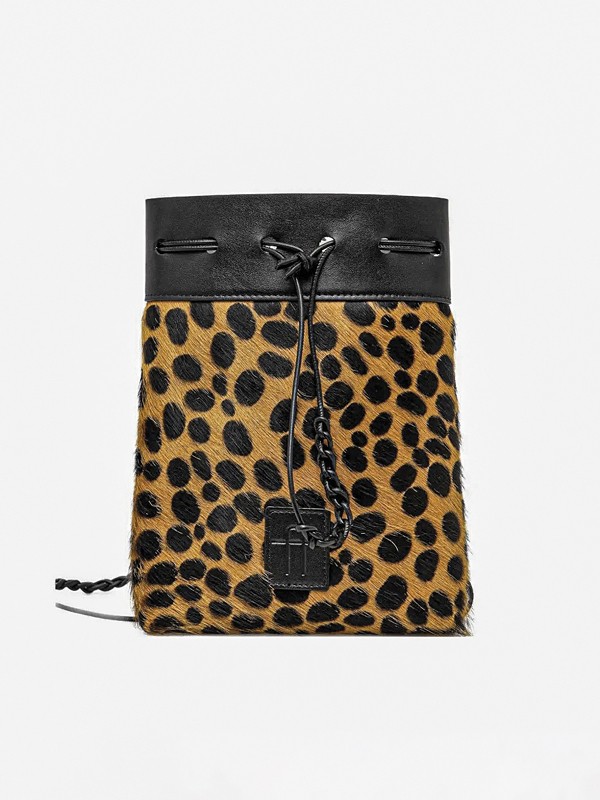
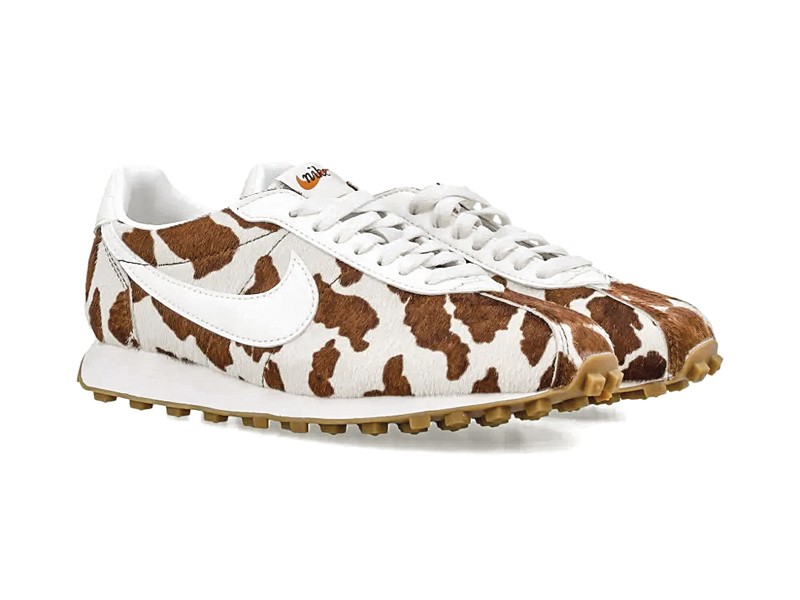
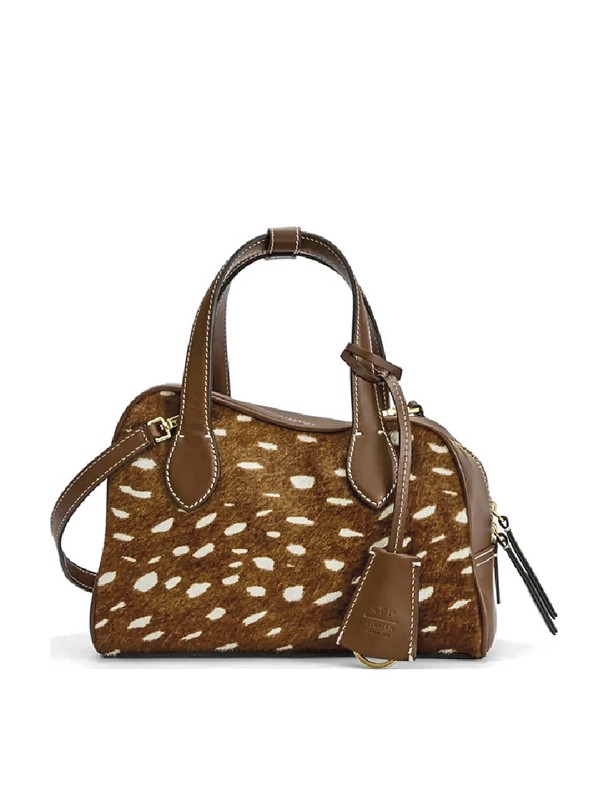
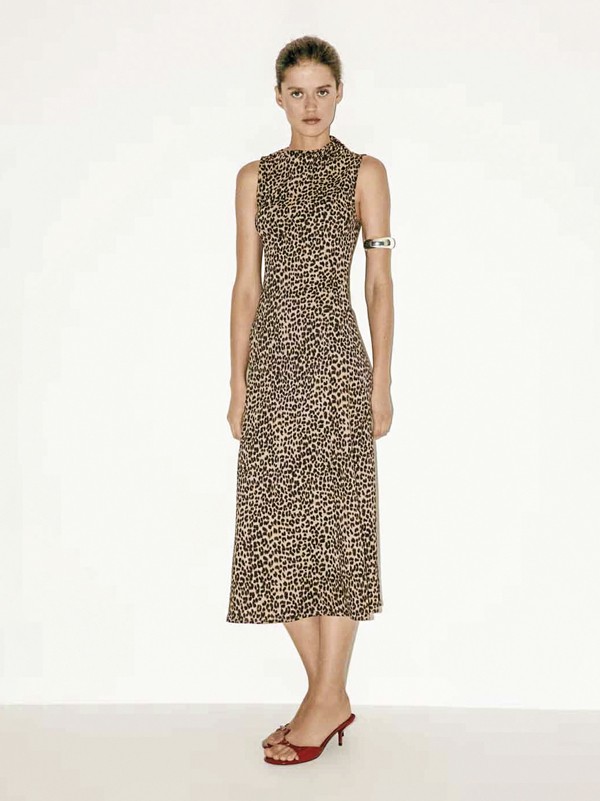
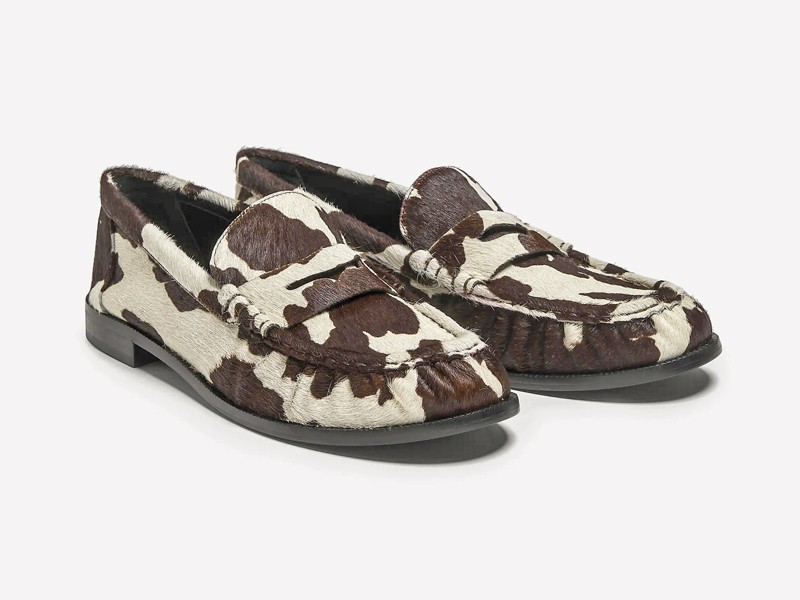
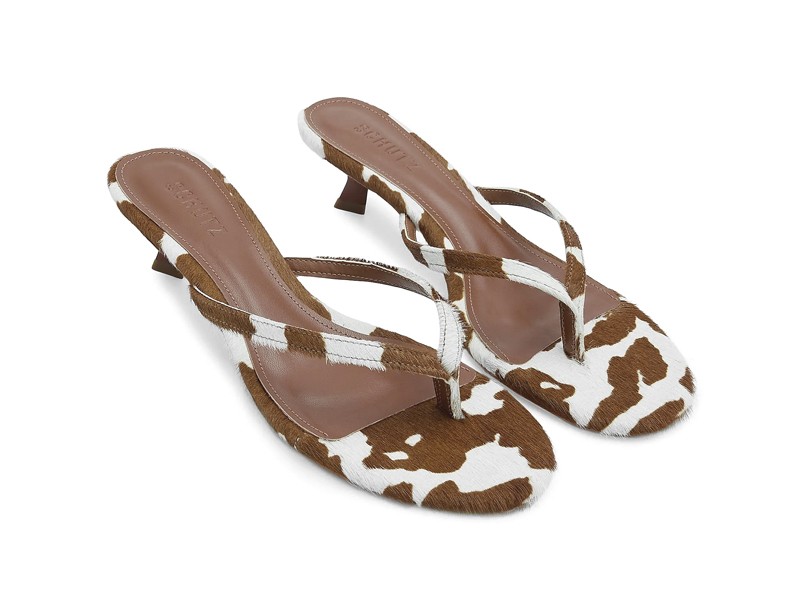
The selection brings together two principal readings. One uses irregular brown patches on white or light grounds, with a cowhide-like appearance; the other features smaller dark spots on tan grounds, visually associated with leopard patterns. This description refers only to the observed graphic and does not confirm the origin, composition or process applied to each surface. That distinction keeps the analysis focused on verifiable elements: motif distribution, color contrast and the relationship between pattern and footwear shape.
The large-spotted pattern appears on ballerinas, low lace-up shoes, slim sneakers, loafers, mules, sandals and a bag. The smaller spotted motif is concentrated on backless shoes and in the apparel reference. This range shows that the visual identity does not depend on a single last or sole unit. It can cover an entire upper, enter through panels, define straps or extend to accessories while each silhouette retains the recognizable codes of its category.
Continuous surfaces provide more space for the complete graphic to remain legible. On ballerinas, loafers and mules, the motif extends from the toe toward the sides and turns the upper into the main focal point. On athletic-inspired models, animal print shares the surface with laces, overlays, piping and plain sections. This segmentation reduces the visible pattern area and makes placement important so that contrast remains controlled across the overall design.
Sandals introduce a different scale: straps display fragments of the pattern and alternate printed-looking areas with open space. For suppliers and manufacturers, this difference makes cutting plans, motif placement and color continuity between pieces relevant development variables. Not every morphology requires the same repeat or graphic proportion. A coordinated program can preserve the ground, palette and type of marking while adjusting size, direction and coverage to the available surface of each model.
The visible Pantone 16-1439 TCX Caramel, Pantone 19-3915 TCX Evening Blue and Pantone 11-4201 TCX Cloud Dancer references organize the proposal around a warm brown, a dark supporting tone and a soft white. Black, beige and additional brown variations complete the range. This chromatic framework connects different motifs without requiring every product to repeat exactly the same combination. Plain colors also appear on piping, laces, soles, insocks and bottoms, where they contain or intensify the print.
To structure a commercial family, manufacturers and brands can organize the assortment through three levels: statement surface, partial panel and applied detail. This progression distributes the resource among categories of different scales and coordinates footwear with leather goods without making the products identical. The supplier opportunity centers on printed-looking surfaces, upper panels, straps, piping, laces, linings and color components that can support a consistent visual specification, with composition and performance information supplied by each company.
Suppliers of printed surfaces, panels, straps, piping and color components, together with footwear and leather goods manufacturers developing animal-print families, can present their proposals through SERMA.NET and SERMA's digital catalog. The visual format is also suitable for showing coordinated series through content on Instagram @serma_net and Facebook SERMA, including collaborative posts when a company has a specific collection, material or application to communicate.
Contact: marketing@serma.net | WhatsApp: +54 9 351 394 8656