Woven boat shoes coordinate openwork, edges and laces

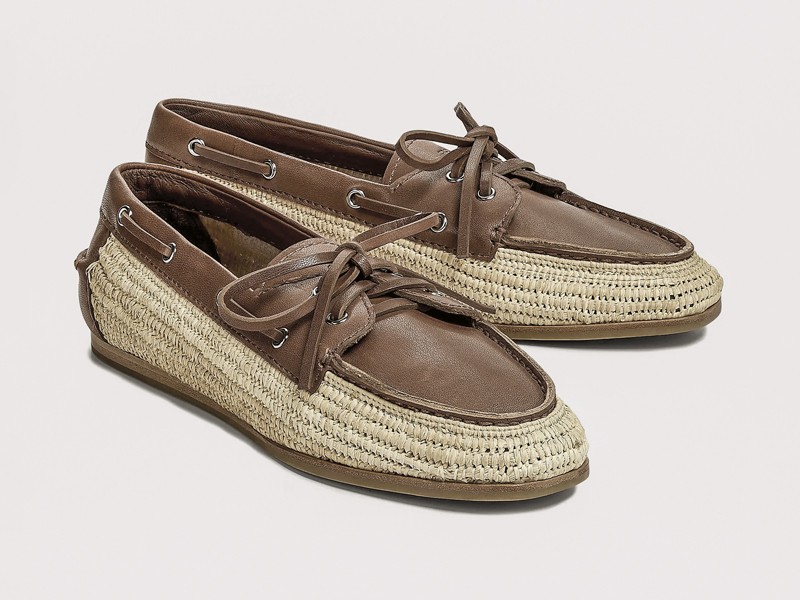
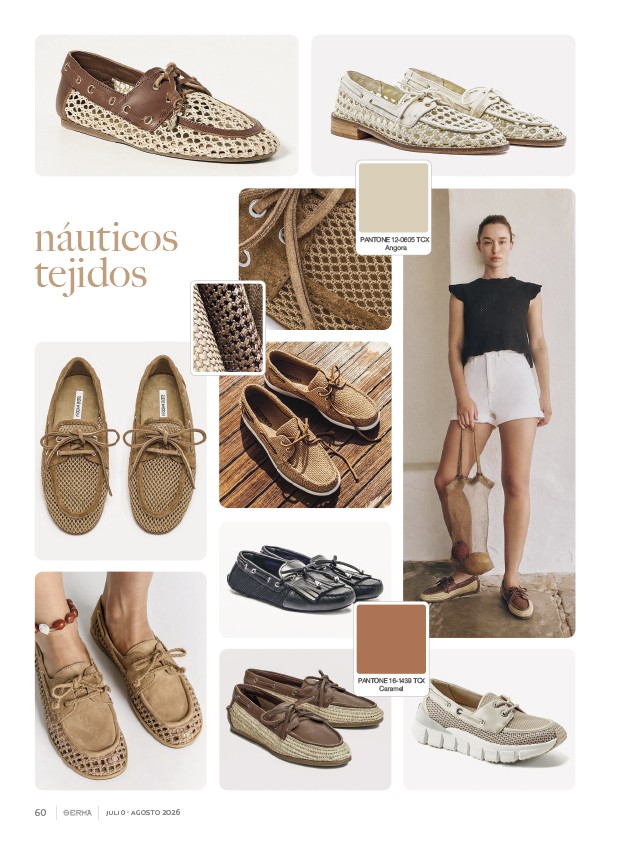
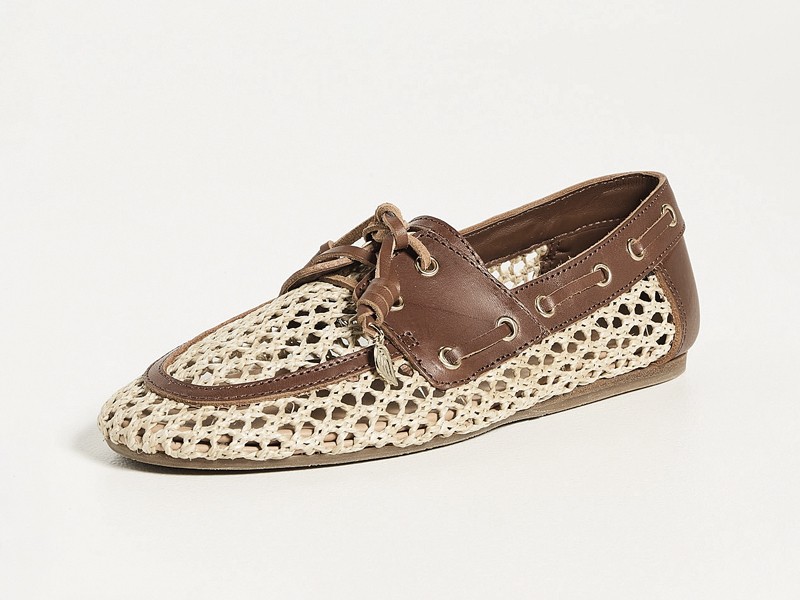
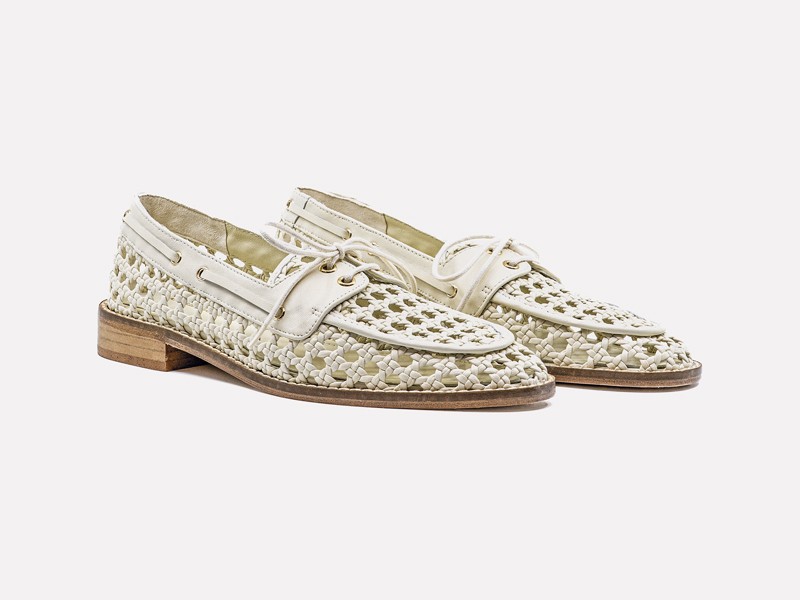
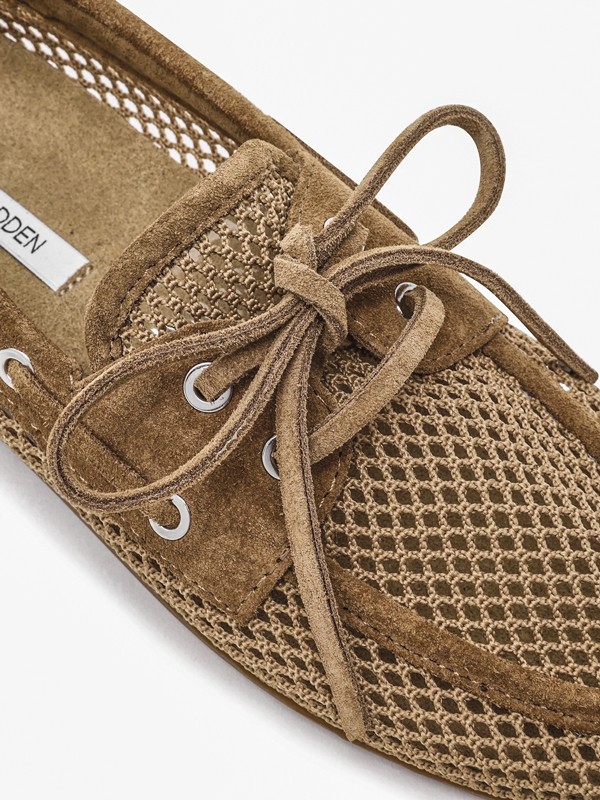
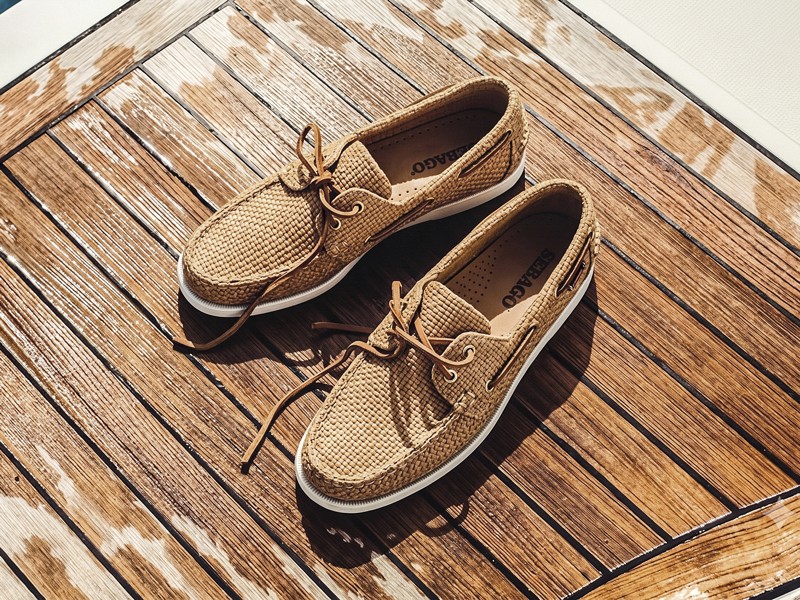
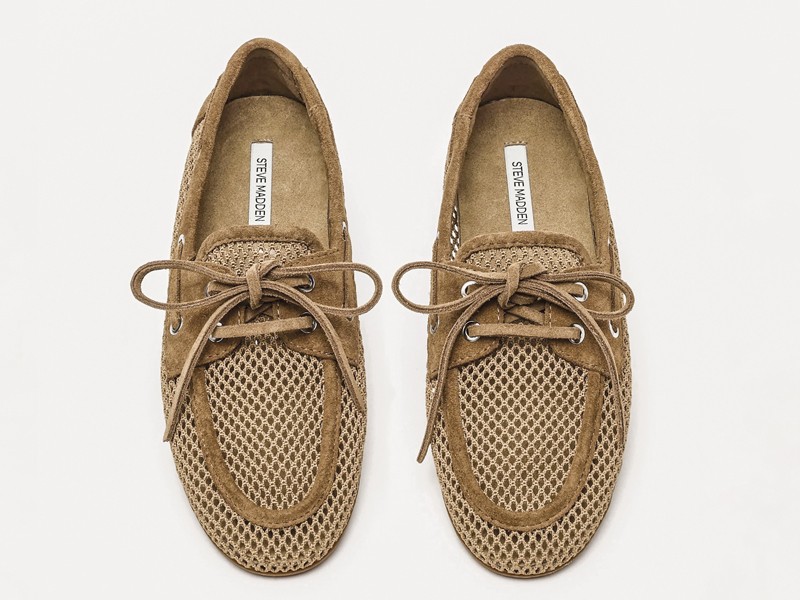
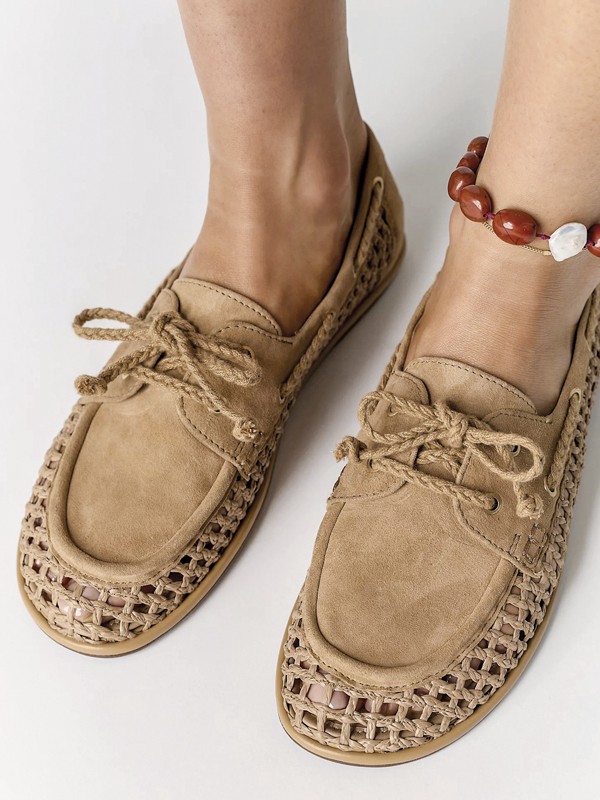
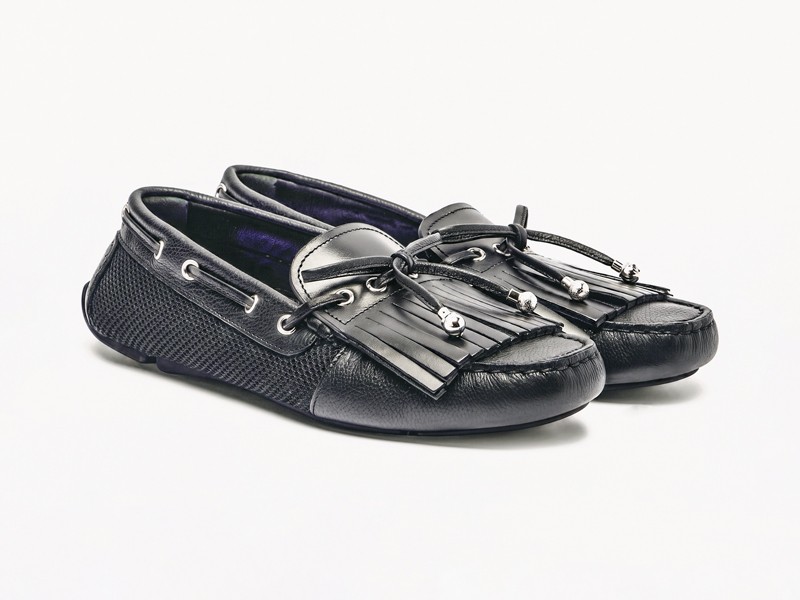
The boat shoe remains recognizable through its moccasin-style toe, low profile, laces and the edge running around the opening. The visual change appears when broad sections of the upper take on an openwork or woven appearance. On some styles, this surface covers the vamp and quarters; on others, it is concentrated at the toe or combined with smooth-looking pieces. The spaces between crossings alter the density of the product without erasing the architecture of the typology.
The phrase “woven boat shoes,” used as the page’s editorial label, describes this visible reading and does not confirm composition or manufacturing process. The structures may appear more open, compact, regular or irregular, while the pattern changes scale according to its placement. For product development, this distribution makes it possible to approach the upper as a panel system: a leading surface, a perimeter frame and joining points that need to be defined together. This arrangement also clarifies where the open surface ends and the framing construction begins within each style.
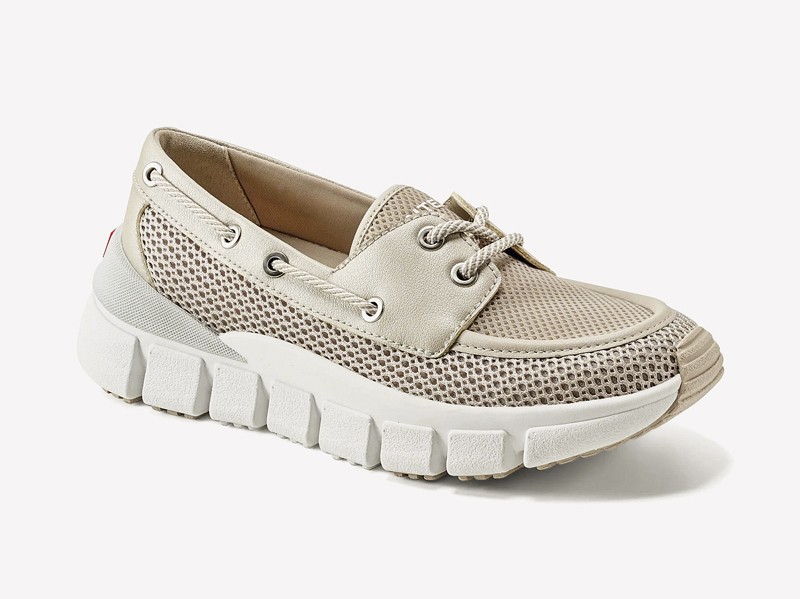
Smooth-looking pieces act as visual containment around the woven areas. They appear along the opening, tongue, toe, quarters or heel and establish a clear transition between sections. Visible stitching, bindings, eyelets and lace paths strengthen this graphic organization. The page supports observations about form and proportion, but it does not demonstrate resistance, stability, fit regulation or any other technical performance associated with these components.
Color helps bring together pieces with different treatments. Angora and Caramel, the Pantone references printed on the page, accompany beige, tan and brown shades that soften the contrast between weave, edge and sole. Light and dark options also appear, using tonal difference to emphasize the pattern. These references guide the editorial reading; the photograph cannot confirm that each product exactly reproduces the Pantone standard or that all surfaces share the same finish.
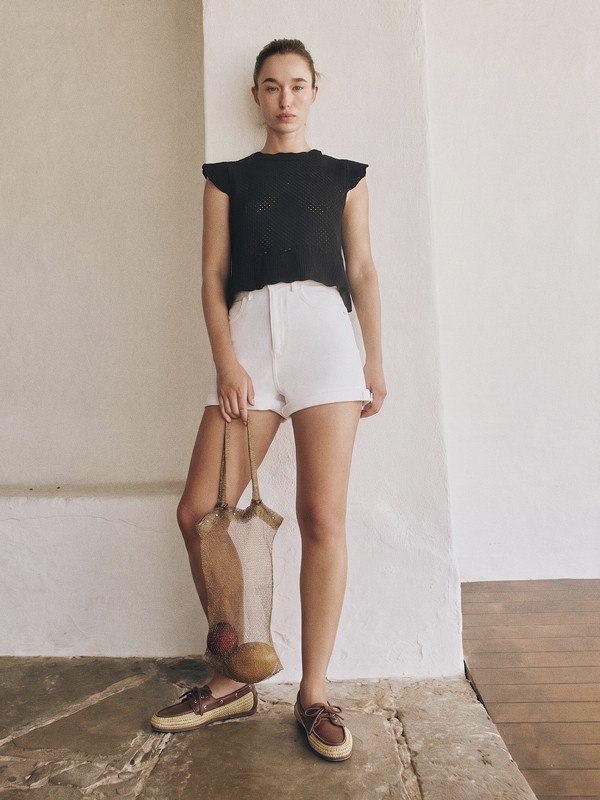
The lower profile moves the same concept across different product registers. Thin soles and small heels preserve a reading close to a lightweight moccasin; edges with an interwoven appearance continue the upper’s visual language; and bulkier or segmented bottoms introduce contrast in scale. These are visible differences in form and proportion. They do not provide evidence of flexibility, weight, grip, cushioning, durability or a particular assembly method.
For manufacturers and suppliers, the opportunity lies in presenting coordinated systems instead of isolated pieces. A commercial sheet can organize the placement and apparent density of the weave, panel geometry, edge type, lace path, visible eyelets, stitching, color combination and sole profile. This map supports comparisons between uppers, reinforcing pieces, finishes and bottoms before defining a family. It also helps brands communicate product variations without turning visual appearance into an unverified material specification. Using those fields, development can scale across light, dark or two-tone versions while preserving clear comparisons and orderly communication between design, sourcing and production teams.
Suppliers of woven-looking uppers, openwork panels, bindings, laces, eyelets, reinforcing pieces and bottoms, together with pattern makers, manufacturers and woven boat shoe brands, can organize their offer through SERMA.NET and SERMA’s digital catalog, adding composition or performance data only when documented. Application comparisons can also extend to Instagram @serma_net and Facebook SERMA, including collaborative posts for specific collections or components.
Contact: marketing@serma.net | WhatsApp: +54 9 351 394 8656