How is the footwear industry doing in Argentina?

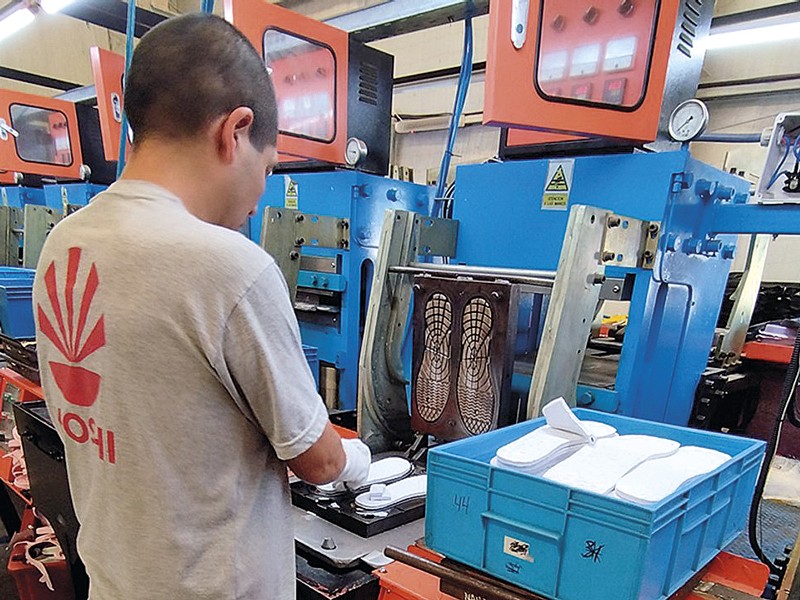
Argentina’s footwear industry is facing an extremely complex situation, along with a pronounced contraction, characterized by a severe decline in domestic sales, growing pressure from imported products and a forced restructuring of the SME production model.
- Collapse of local production
The loss of purchasing power directly reduced purchases by final consumers. According to sector estimates, per capita consumption in the country fell sharply from historical averages of 3.5 to 4 pairs per person per year to around 2 pairs per year.
- Collapse of local production
Production has accumulated an average decline of 30% so far this year. The level of installed capacity utilization in the fashion and apparel network is at historic lows, at around 40-42%.- Increase and impact of imports
Over the past 17 months, around 67 million imported pairs have entered the country, mostly finished products of Asian origin, from China, Vietnam, Indonesia and Thailand. Lower tariffs and simplified foreign trade procedures expose the national industry to an unequal competitive scenario in terms of costs and scale.
- Concern over anti-dumping measures
Business chambers are closely monitoring the expiration, in December 2026, of anti-dumping trade defense measures against footwear of Chinese origin. They state that, if these measures are not renewed, the loss of local market share by the manufacturing industry would be irreversible.
- Restructuring and closures
Several long-standing brands have announced the closure of their production plants in order to move to a 100% import and commercial model, such as the recent case of John Foos in San Isidro. The same is occurring with preventive insolvency proceedings.
- Employment
There has been a significant adjustment in plant personnel at factories and upper-stitching/cutting workshops. Many SMEs have drastically reduced their workforce in order to survive at minimum production levels.
- Suppliers
The impact is being transferred directly to tanneries, sole, component and chemical/textile supply companies, with a payment chain under pressure due to stagnant demand.
- Retail sales
There has been an increase in the closure of street-level retail stores and in leases that are not being renewed. The online channel maintains a marginal share, but it is not sufficient to absorb installed factory capacity.
Faced with pressure from fixed costs, including utility rates and inputs, and the lack of volume, manufacturers that continue producing are resorting to:
- Intermittent manufacturing schemes
Small batches focused on immediate replenishment to avoid the accumulation of immobilized stock.
- Differentiation through added value
A focus on leather footwear, specific fashion niches, own design and rapid response flexibility compared with imported products from fixed catalogs.
- Strict financial management
Shorter collection periods and extreme caution regarding credit risk within the commercial chain.
RELATED ARTICLES:
- FOOTWEAR IN ARGENTINA. How do imports affect the sector?
- ARGENTINA. Shoemakers take to the streets