Latin American Footwear Sector Leaders addressed the regional agenda

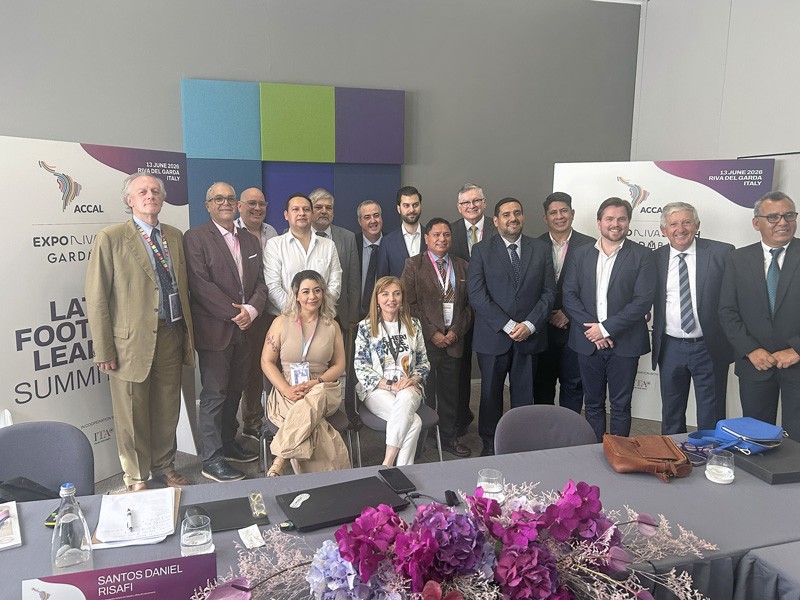
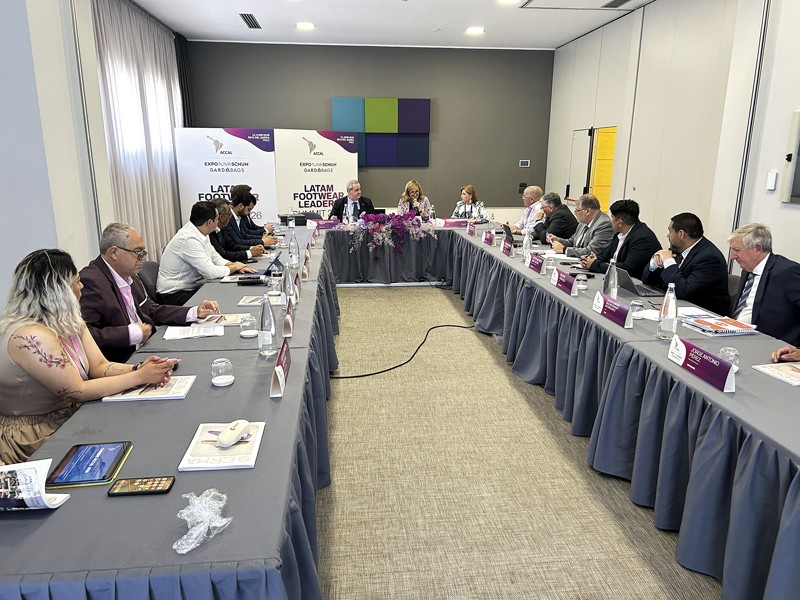
Regional trade, external competition and production conditions were the main focus of the LATAM Footwear Leaders Summit 2026. The meeting was held on June 13 in Riva del Garda, simultaneously with EXPO RIVA SCHUH and GARDABAGS, under the organization of the Association of Footwear Chambers of Latin America (ACCAL) and with the support of Riva del Garda Fierecongressi.
The conference brought together representatives from twelve countries, from a region that jointly manufactures an annual volume close to 1.5 billion pairs. The debate was moderated by Daniel Risafi -ACCAL coordinator- and included representatives from Argentina, Brazil, Chile, Colombia, Ecuador, El Salvador, Guatemala, Mexico, Nicaragua, Peru, Uruguay and Venezuela.
From that production scale, the summit addressed the difficulties affecting the Latin American footwear industry. Smuggling and counterfeiting emerged as shared issues, while in some markets infrastructure limitations were also identified, including those related to energy supply.
In particular, the massive entry of Asian products into the region was the cross-cutting issue of the exchange, even though countries present different realities in terms of size and characteristics. According to the discussion, 2025 recorded record figures for this type of imports, making it necessary to discuss more coordinated responses.
Among the alternatives mentioned was the construction of a Latin American market with greater facilities for exchange. The need to differentiate production was also noted, since competing solely on price is not enough.
The event also included proposals linked to the creation of an economic community modeled on the European Union, origin labeling with common rules and internal free trade. Along these lines, some interventions guided the discussion toward the quality of raw materials and design, especially in order to operate commercially in markets such as Europe and the United States.
The main point of consensus was the urgent need to stop working in isolation and build a common strategic program. Daniel Risafi, ACCAL coordinator, summarized the essence of the meeting under a clear premise: “The challenge is to stop thinking individually and start building a common program that allows us to compete as a region on the world stage.”
It was recalled that, although Asia overwhelmingly dominates 89% of global footwear production, Latin America is firmly established as the world’s second-largest producer, accounting for 5.6% of the total market and exceeding 1.5 billion pairs annually. The bloc brings together around 38,000 companies and employs nearly one million workers.
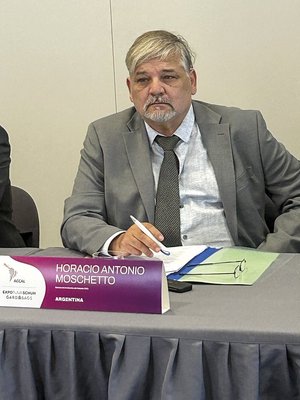
• Argentina: Horacio Moschetto and Daniel Risafi
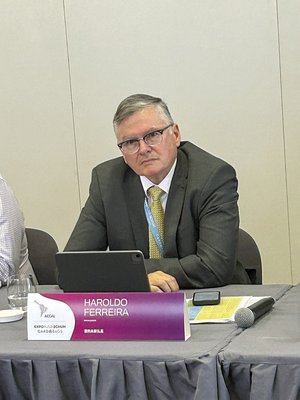
• Brazil: Haroldo Ferreira and Cristian Schlindwein
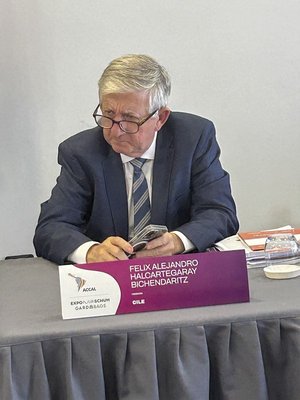
• Chile: Félix Halcartegaray
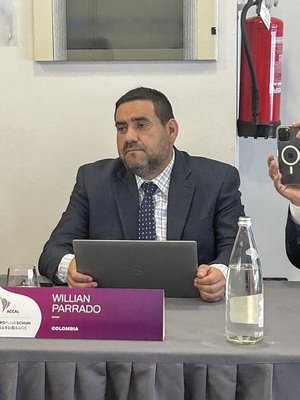
• Colombia: William Parrado
• Ecuador: Jorge Pérez
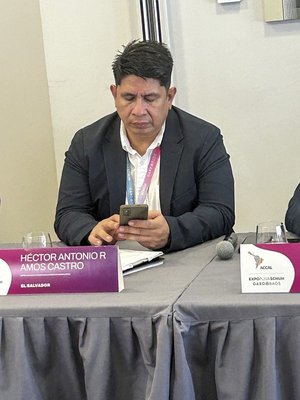
• El Salvador: Héctor Ramos
• Guatemala: Marcos Wong
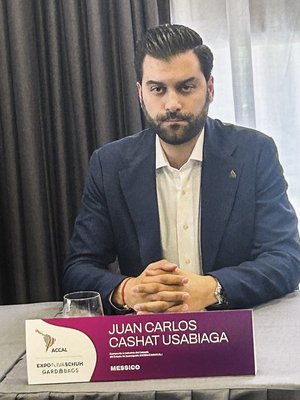
• Mexico: Juan Carlos Cashat and Lucía Herrera
• Nicaragua: Alejandro Delgado
• Peru: Ricardo Espinoza
• Uruguay: Alejandro Biasiolli
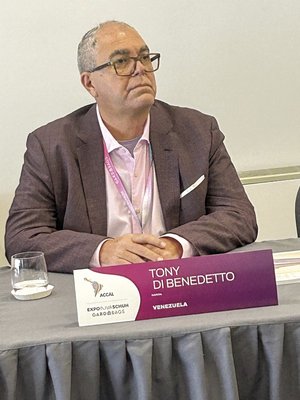
• Venezuela: Tony Di Benedetto
RELATED ARTICLES:
- Latin American footwear summit in Italy
- EXPO RIVA SCHUH established itself as the largest global meeting point for footwear and manufactured goods
- The Latin American footwear industry strengthens ties with Italian technology