From the ring to the runways

A technical and design-driven review outlines the influence of boxing footwear on Winter 2026 collections.
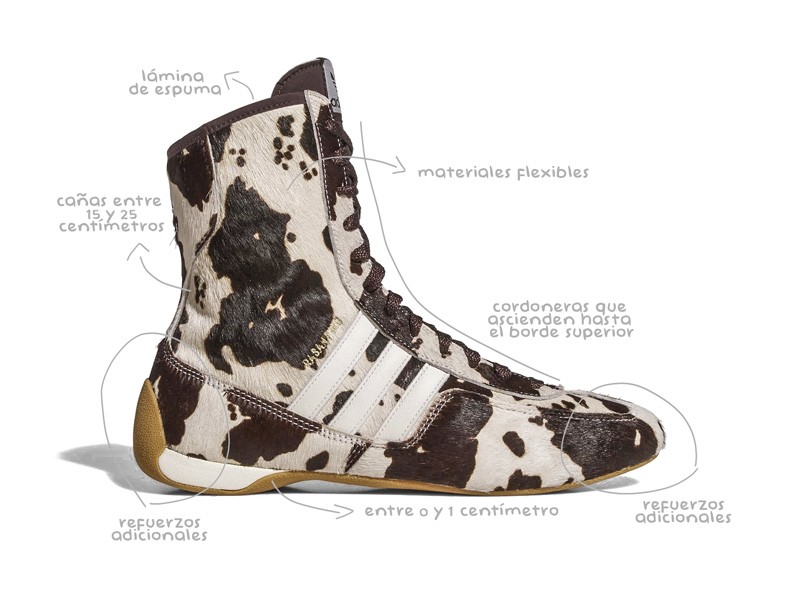
Historically associated with high-performance sport, the boxing boot features a construction focused on a precise fit for both foot and leg, combining lightweight structures with low-thickness materials. Its traditional configuration is based on a streamlined last, with heel heights ranging between 0 and 1 centimeter, designed to support a stable stance close to the ground.
The shaft, typically measuring between 15 and 25 centimeters, incorporates a continuous lacing system that extends to the upper edge. This setup allows for a secure fastening while preserving freedom of movement.
To enhance mobility, shafts are made from flexible materials such as suede, fine nappa leather or thin synthetics, reinforced at the toe-end and heel with additional components that strengthen high-stress areas. At the collar, a foam layer is commonly applied to prevent friction and improve comfort during activity.
This construction responds to the classic parameters of technical boxing footwear, where stability and ease of movement are the primary priorities.
The outsole, a key element in footwear performance, usually features thicknesses between 3 and 6 millimeters. Its main function is to ensure effective contact with the surface, providing grip levels that reduce lateral slippage and allow controlled movement.
The heel counter remains lightweight, with moderate flexibility to retain shape without exerting pressure on the wearer’s heel. Together, these elements define the traditional architecture of the boxing boot, recognized for its streamlined appearance and balanced distribution of support.
In recent seasonal cycles, global fashion has incorporated elements from sportswear language, particularly from disciplines associated with movement and strength. Within this context, boxing aesthetics have emerged as a new resource for urban proposals and upcoming collections. Technical analysis of the original boot serves as a starting point for reinterpretations aimed at 2026, where functional structure coexists with more visible design elements.
Fashion-oriented versions retain the core construction while expanding the range of materials. Options include brushed suedes, short-hair materials, pigmented nappa leathers and soft-touch synthetics.
Traditional reinforcements are combined with decorative trims and special eyelets. Contrasting-color laces appear alongside Velcro straps applied in unconventional directions, as well as fringes on soft-finish shafts.
Higher tongues and color combinations that emphasize aesthetics without altering the original technical identity are also observed.
In these developments, the sole must preserve efficient grip and low rebound levels, requirements that define the morphology of boxing footwear. Shaft design, while more expressive in fashion contexts, respects the natural width of the leg and maintains a streamlined silhouette, with ascending lines and controlled volumes.
A balanced alternative for bringing this trend to market involves starting from a contemporary sneaker and applying boxing technical principles to its structure. The result is a functional product, visually aligned with current trends and supported by construction parameters typical of precision athletic footwear.