Injection of soles: problems and solutions

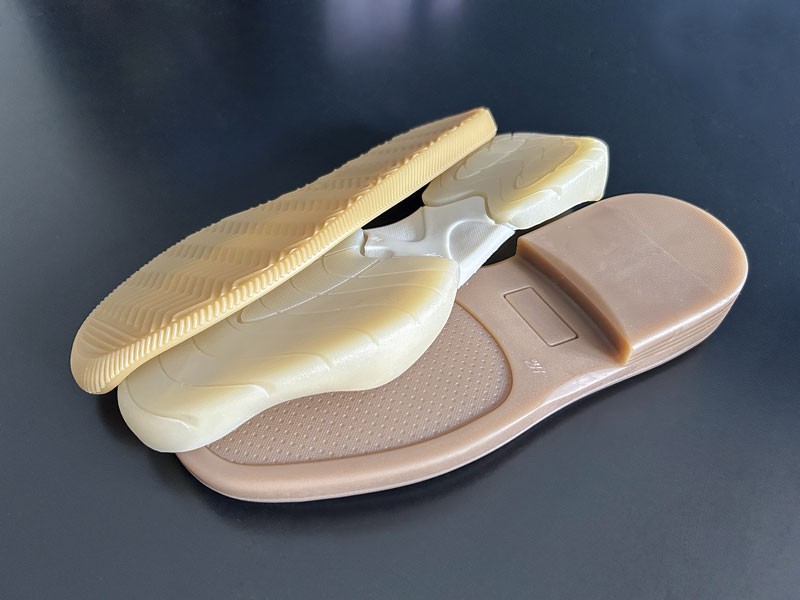
The production of injected soles using thermoplastic materials presents a series of challenges that, if not properly managed, may result in significant defects. The most common issues are related to the injection process, the mold, and the material used. Below are the main problems and their corresponding solutions.
Incomplete filling (short shots): Occurs when the molten material does not completely fill the mold cavity.
Solutions: Increase injection pressure and speed, raise mold and/or material temperature, and check the design of the feed channels to ensure proper flow.
Flash: Excess material seeps through the mold’s joining lines.
Solutions: Increase mold clamping force, reduce injection pressure, and inspect the mold for wear or misalignment.
Sink marks: Depressions or shrinkage marks on the surface of the sole, especially in areas with changes in thickness.
Solutions: Increase holding pressure and time to compensate for material shrinkage, improve the mold’s cooling system for more uniform temperature, and redesign the part to achieve more consistent wall thickness.
Weld lines: Visible marks where two flow fronts of the material meet and solidify.
Solutions: Increase material or mold temperature to improve flow and bonding, or increase injection speed.
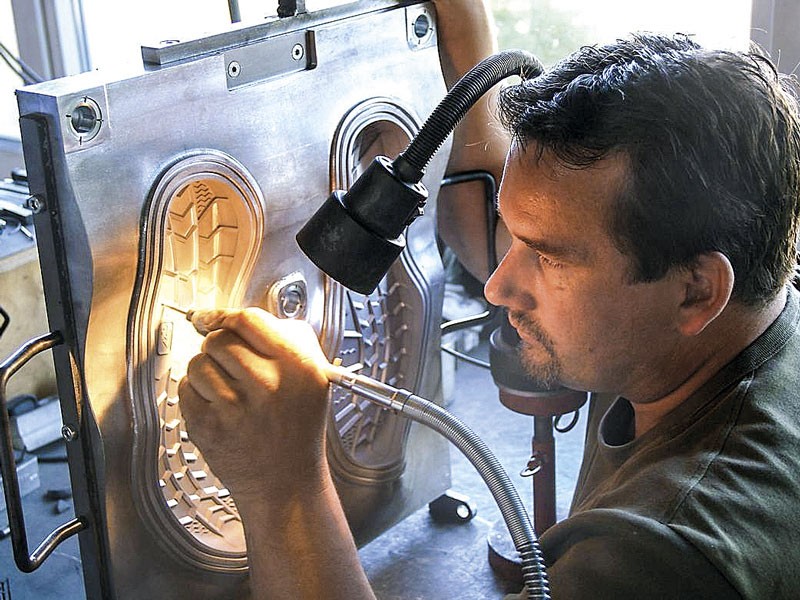
Mold defects: A worn mold, poor ventilation, or a deficient design can cause multiple defects.
Solutions: Preventive and corrective maintenance is essential, as well as an optimized design with efficient venting and cooling channels.
Moisture in the material: Hygroscopic materials such as TPU and EVA absorb moisture, which turns into vapor during injection, leading to internal bubbles and brittleness.
Solutions: Proper drying of the material before processing is crucial.
Material degradation: Caused by excessively high processing temperatures or prolonged residence time in the injection machine. This can lead to discoloration, burns, and reduced mechanical properties.
Solutions: Keep processing temperatures within the material supplier’s recommended range and avoid unnecessarily long injection cycles.
